

Got 30 minutes or less to lock down ceremony logistics? Choose wisely. Religious ceremonies, though packed with rituals, often stretch beyond 30 minutes. Secular ones play quick and efficient in a zippy 5-20 minutes, focusing on essentials. Spiritual ceremonies? You’re riding the wave; durations vary based on your personal touches. To nail it, strategically cap your ceremony to keep your guests engaged and moving seamlessly to the next phase. Want more pro tips to ace your wedding strategy?
Quick verdict: Religious vs. Secular vs. Spiritual (who each is best for)
When it comes to crafting your wedding ceremony, choosing between religious, secular, and spiritual styles boils down to your core values and priorities. A well-executed ceremony type comparison helps you decide. Religious ceremonies are perfect if structure and tradition are non-negotiable—think rituals and fixed timelines. Secular options streamline the process, ideal for efficiency lovers who want legalities minus fluff. Spiritual ceremonies offer flexibility, letting you pivot between elements that matter most. It’s essential to consider the guest comfort during ceremony planning to ensure everyone has an enjoyable experience.
Choosing between religious, secular, or spiritual ceremonies depends on your core values and priorities.
- Religious: Structured and traditional; think Catholic masses or Islamic Nikah.
- Secular: Streamlined for those who prioritize efficiency and legality.
- Spiritual: Offers flexibility and personalization for custom believers.
- Ceremony structure types: Choose based on adherence to tradition or personal belief.
- Religious vs secular: Decide what aligns with your core values and lifestyle.
Next steps? Decide what aligns with your vision and execute with precision.
At-a-glance comparison: Religious vs. Secular vs. Spiritual
Steering through the world of wedding ceremonies can feel like managing a high-stakes project, but nailing down the right style is essential for your big day’s success. Let’s break down the ceremony style options so you can strategically choose your perfect fit:
| Ceremony Style | Duration (Minutes) | Key Features |
|---|---|---|
| Religious | 25-40 | Doctrine-driven, ritual-rich, tradition depth |
| Secular | 5-20 | Efficiency-focused, no religious mentions, legally streamlined |
| Spiritual | Flexible | Customizable, spiritual tones, remembers loved ones, high meaning |
Religious ceremonies offer structured reverence; secular ones get straight to the legal point, and spiritual ceremonies allow for personalized, meaningful touches. In some cases, civil marriage ceremonies are preferred for their flexibility and inclusivity, welcoming diverse couples with the same legal weight as religious ceremonies. Your mission? Choose a style that aligns with your priorities and timeline. Remember, precision planning and execution are non-negotiable. Next steps: create your ceremony timeline and guest checklist—keep things moving and meaningful.
Define the options (so you’re comparing the right things)
When it comes to ceremony length, knowing what you’re dealing with is non-negotiable. Religious ceremonies are rooted in tradition, packed with rituals and can extend anywhere from 30 minutes to multiple days—don’t confuse them with quicker options. Meanwhile, secular and spiritual ceremonies are all about streamlined efficiency or personalized touches, so sort out which aligns with your vision before you find yourself unexpectedly blessed and stressed. Most ceremonies last between 20 and 30 minutes, but this can vary significantly based on cultural and religious factors.
Religious: what it is, what it includes, and the common misconceptions
Steering through the world of religious ceremonies doesn’t have to feel like deciphering an ancient scroll. Let’s streamline this: religious ceremonies are formal gatherings packed with symbolic and transformative power. They’re not just about tradition; they’re executed with precision to honor spiritual beliefs and cultural values. These events include specific rituals, chants, prayers, and offerings, often performed in sacred spaces like temples or churches. They mark significant life events, from marriage to rites of passage, using structured actions and special elements like music and dress. A common misconception? They’re just rote acts. Nope. They engage the mind and soul, uniting the tangible with the spiritual. Many sacred ceremonies have roots in ancient traditions and civilizations, demonstrating the enduring connection between past and present in spiritual practices. Next step: identify what resonates with your values and strategically incorporate it into your ceremony.
Secular: what it is, what it includes, and the common misconceptions
You’ve navigated the labyrinth of religious ceremonies, and now it’s time to shift gears toward something that speaks directly to your values and your story—secular ceremonies. These non-religious events are strategically designed to celebrate your unique love story without spiritual constraints. Think of secular ceremonies as a blank canvas for your relationship narrative—personalized readings, symbolic rituals, and active participation are all on the table. Forget the cookie-cutter approach; you’ve got a framework but no limits. Misconceptions abound—yes, you can sprinkle in religious elements if you’re inclined, and professional secular officiants are ready to guide you. Avoid confusion: secular is non-religious, while non-denominational still has religious ties. Secular rituals provide structure, meaning, and continuity in social life, making them a valuable framework for personal celebrations. Ready to streamline your ceremony? Start with a clear vision and a killer checklist.
Spiritual: what it is, what it includes, and the common misconceptions
Although spiritual ceremonies might initially seem like a free-form alternative to religious rituals, they’re anything but a disorganized affair. These ceremonies strategically emphasize personal connections to the divine, nature, or your inner self—no need for rigid doctrines. They’re executed with intention, incorporating elements like fire, water, and herbs for transformation and unity. Imagine setting sacred intentions through affirmations and offering symbolic items like flowers or colored sands. You’ll invoke divine forces or spirit guides to kick things off, then close with gratitude or communal prayers. Misconceptions? They’re not just serious or religious. They’re adaptable, playful, and universal, transcending cultures. Participation in these ceremonies fosters deeper connections to oneself, nature, and the spiritual world. Ready to go spiritual? Streamline your approach with a checklist: define your values, select symbolic acts, and go forth with clarity.
Cost breakdown (upfront vs hidden costs)
When breaking down wedding costs, it’s essential to distinguish between upfront expenses and those sneaky hidden fees that can surprise you if you’re not prepared. Upfront costs like venue rentals and musicians are straightforward, but hidden fees such as officiant travel charges or rehearsal time can quickly rack up. Additionally, active church members often receive substantial discounts on venue fees, which can significantly reduce overall expenses. It’s also important to be aware of service charges and gratuities that may be added to your bill, as these can affect your budgeting if not accounted for in advance. By strategically planning and accounting for these costs early, you’ll maintain control over your budget and focus on what truly moves the needle for your big day.
Line-item cost comparison by tier/budget
Diving headfirst into wedding planning? Let’s get real about costs. You need a strategic view of tiered budgets to keep chaos in check. Here’s a sharp breakdown:
| Item | Low-Tier | High-Tier |
|---|---|---|
| Venue | $500 – $1,000 (small church) | $2,966 max (high-tier religious) |
| Officiant | $300 – $800 (religious donation) | $1,000 (custom secular) |
| Hidden Extras | $30 – $100 (dress code supplies) | $2,700 (rehearsal dinner) |
Be sure to factor in hidden costs like travel fees and attire extras. Church weddings often foster a sense of community and commitment, enhancing the overall experience and potentially justifying the costs involved. Prioritizing spending on what truly matters, such as venue and catering, can help you stay within your financial goals while achieving a memorable event. Your next step? Create a non-negotiable budget checklist. Avoid surprises; plan smartly to execute an impactful ceremony without unexpected chaos. Ready to tackle the hustle? Keep moving!
What actually drives cost changes
Let’s cut through the frills and get to the heart of what really drives wedding costs. It’s about strategic choices and steering through hidden expenses. Venue fees are the big-ticket items, but don’t overlook stealthy service charges and minimum spends. Catering costs pivot on per-guest calculations, with gratuities sneaking in over 20% extra. Vendor service fees can jump with last-minute additions, so plan with precision. Guest count is a multiplier—more guests mean more outlay, period. Hidden costs like rehearsal dinners and honeymoon expenses can ambush your budget. Anticipating Hidden costs is crucial for savvy decision-making and ensuring your budget aligns with actual expenses. Reality Check: Anticipate hidden fees; they’re non-negotiable.
Planning workload & logistics impact
You’re not just planning a ceremony; you’re executing a meticulously coordinated event where time, complexity, and coordination are non-negotiable. Strategic vendor availability and flexibility become essential as you align moving parts with precision, ensuring everything from the officiant’s timing to the venue’s schedule runs like a well-oiled machine. So, keep your checklist handy and timelines tight, because in this hustle, efficiency isn’t just a goal—it’s your secret weapon. Remember, real-time inventory tracking enhances decision-making speed, allowing you to adapt swiftly to any changes.
Time, complexity, and coordination differences
When you’re managing a wedding like a high-stakes project, understanding the time, complexity, and coordination differences between ceremony types is non-negotiable. Secular ceremonies, typically under 20 minutes, streamline focus on the couple’s commitment, reducing complexity and coordination needs. Religious ceremonies, like Catholic weddings, exceed 30 minutes with intricate rituals, demanding precise coordination with officiants and participants. The Muslim Nikah, though shorter, involves gender-separated groupings, adding a unique layer of complexity. Traditional rites like Hindu ceremonies can extend over days, intensifying planning needs. Remember to:
- Assess ceremony duration for efficient scheduling.
- Simplify secular setups with fewer participants.
- Strategically coordinate religious events requiring officiant involvement.
- Prioritize personal elements in secular formats.
- Plan for traditional rituals’ complexity with precision.
Incorporating personalized wedding trends can further enhance the ceremony by resonating with the couple’s unique story, reflecting personal authenticity, and avoiding generic aesthetics.
Ready to execute? Let’s move.
Vendor availability + flexibility considerations
Maneuvering vendor availability isn’t just a task—it’s a strategic maneuver that demands precision and foresight. You’ll juggle 14 vendors, so start by booking the venue, as it sets the stage for everything. Photographers are a hot commodity, and religious officiants require a 6-9 month head start. Use planning apps for vendor discovery but prefer offline bookings for personalized discussions.
- Prioritize venue booking; it influences all logistics.
- Scout religious officiants early, especially in unfamiliar areas.
- Use apps for vendor comparison; negotiate offline.
- Opt for flexible payments and seasonal pricing.
- Choose local vendors to streamline regional logistics.
Reality Check: Balance cultural needs against budget constraints. Vendor gratuities add up, so plan for them. Ready to pivot? Make a checklist and execute efficiently. Remember, utilizing a structured template for objectives, audience, deliverables, timelines, budget, and stakeholders can streamline the planning process and ensure successful vendor coordination.
Guest experience impact
When it comes to guest experience, the ceremony length can make or break the vibe. You want guests engaged, not squirming, so strategically choosing a 20-25 minute ceremony keeps everyone energized and focused on the main event—celebrating you. Extended rituals might mean more tradition, but they can also test patience, especially when young guests start eyeing the exits, so keep the pace brisk and the changes seamless.
How guests perceive it + where friction shows up
In the whirlwind of wedding planning, guest perception of ceremony length often goes overlooked, yet it’s essential for maintaining their engagement. Let’s face it, nobody wants to see guests squirming or checking their watches. When ceremonies stretch beyond 30 minutes, you risk losing your audience, especially if they’re young or restless. A streamlined ceremony respects everyone’s time and keeps the energy alive.
- Keep it under 25 minutes: That’s your sweet spot for guest satisfaction.
- Beware the young ones: They’re the first to get fidgety.
- Avoid overstuffing: Too many speeches or rituals can drag things out.
- Keep rhythm: A steady pace minimizes guest attrition.
- Be strategic: Prioritize what truly matters to you both.
Reality Check: Longer doesn’t mean better. Keep it purposeful. Additionally, planning a well-structured budget can help avoid hidden costs and keep your event running smoothly, ensuring a positive experience for both you and your guests.
Best-fit scenarios (choose based on constraints)
You’ve got constraints, and we’re here to help you navigate them. Choose religious ceremonies if staying true to your faith’s traditions is non-negotiable and you can budget the extra time. Opt for secular options when you need speed and simplicity without spiritual elements, or go for spiritual ceremonies if you want to highlight personal beliefs with flexibility.
Choose Religious if…
Opt for a religious ceremony if you’re maneuvering the maze of tradition with precision and purpose. You’re not just ticking off boxes; you’re strategically weaving rituals into a tapestry of significance. Catholic, Jewish, or Hindu ceremonies offer depth, accommodating larger crowds and personalized traditions. Here’s why a religious ceremony might be your best move:
- Navigating Tradition: Embrace structured rituals that respect your heritage.
- Crowd Accommodation: From processions to participation, it handles larger groups with grace.
- Extended Impact: Rituals and blessings stretch beyond typical timelines—ensure it’s a non-negotiable fixture.
- Cultural Connection: Powerful ties to your roots, bridging generations.
- Customization Mastery: Tailor readings and vows to reflect your shared journey.
Religious ceremonies often align with urban wedding costs, which can significantly influence your budget considerations. Reality Check: Extended ceremonies mean more planning. Strategize for efficiency.
Choose Secular if…
When time is tight and tradition isn’t your scene, a secular ceremony gets the job done without the frills. Perfect for career-focused couples who need every second to count, these ceremonies are executed with precision and purpose. You’ll strategically streamline your event to fit within a tight schedule, ensuring it flows smoothly and efficiently.
- Time-Sensitive Execution: Lasts 15–30 minutes, aligning with tight timelines.
- Guest Engagement: Keeps focus sharp, preventing nodding off before vows.
- Budget-Friendly: Minimalist format keeps costs down without compromise.
- Efficient Venue Use: Fits snugly into allocated 30-minute slots.
- No-Fuss Structure: Strips away excess for a straightforward, non-negotiable ceremony.
Reality Check: Allocate a 10–15% contingency buffer in your budget to prepare for unexpected costs. Remember, every minute matters. Plan each element with precision to avoid chaos and maximize your day’s momentum.
Choose Spiritual if…
If you’re craving a ceremony that respects your spiritual side without tethering you to lengthy religious rites, a spiritual ceremony hits the sweet spot. It’s ideal for ambitious couples who want a meaningful yet streamlined experience. Think 20-30 minutes of kinetic, heartfelt moments that respect your time and your guests’ attention spans. Embrace this efficient choice for a ceremony that’s personalized without being preachy.
- Strategically short: 25-30 minutes, no fluff.
- Customizable elements: Include personal vows and meaningful traditions.
- Guest-focused: Keeps everyone engaged without fatigue.
- Non-negotiable efficiency: Shift swiftly to celebration mode.
- Avoids religious marathon: No extended rites, just what matters.
Reality Check: Don’t stretch your spiritual ceremony—pivot to the party promptly and keep your guests energized.
Real-world scenarios (examples with numbers)
Let’s break it down with three sample scenarios that put numbers to your priorities: An intimate 50-guest ceremony with a $15K budget demands a strategically streamlined civil ceremony of just 20 minutes—quick, efficient, and perfect for the busy professional. A mid-sized 150-guest gathering with $45K to play with can afford a 45-minute Jewish ceremony, balancing tradition and time. For your grand 300-guest extravaganza with a $100K budget, a 90-minute Hindu wedding pulls out all the stops, because when you’re going big, you want it executed with non-negotiable flair.
3 sample scenarios: guest count + budget + priorities
Envision this: You’re juggling a thriving career, a social calendar bursting at the seams, and now, the ultimate project—your wedding. Prioritize like a pro. Consider guest count, budget, and ceremony vibe to execute the perfect event. For a lean guest list and swift ceremony, consider a civil option. More guests? A 30-minute spiritual ceremony balances intimacy and inclusion.
Here’s how numbers play out:
| Scenario | Strategy |
|---|---|
| 25 guests, $1,000 | Civil, 20 mins, minimal cost |
| 75 guests, $3,000 | Secular, 30 mins, flexibility |
| 150 guests, $5,000 | Spiritual, 35 mins, personalized |
| 200 guests, $7,000 | Religious, 45 mins, tradition |
In order to allocate resources strategically and align with your wedding priorities, it’s crucial to adjust the budget with precision. Reality Check: Don’t let guest count dictate your vision—strategize venue and ceremony style for maximum impact. Ready to pivot?
Common mistakes (and how to avoid them)
Maneuvering the wedding planning minefield requires a strategic mindset, and common timing mistakes can derail even the most meticulously planned event. Underestimating ceremony lengths or overlooking attention spans can lead to chaos. Trust me, you don’t want guests squirming in their seats. Here’s how to avoid pitfalls and keep your ceremony moving efficiently:
- Consult your officiant early for tradition-specific duration tips.
- Plan for attention spans—aim for a 15-30 minute ceremony.
- Coordinate timelines with the reception; minimize gaps for smooth changes.
- Streamline customizations; excessive add-ons can bloat the schedule.
- Communicate clearly with guests about start times.
Copy/paste decision matrix template
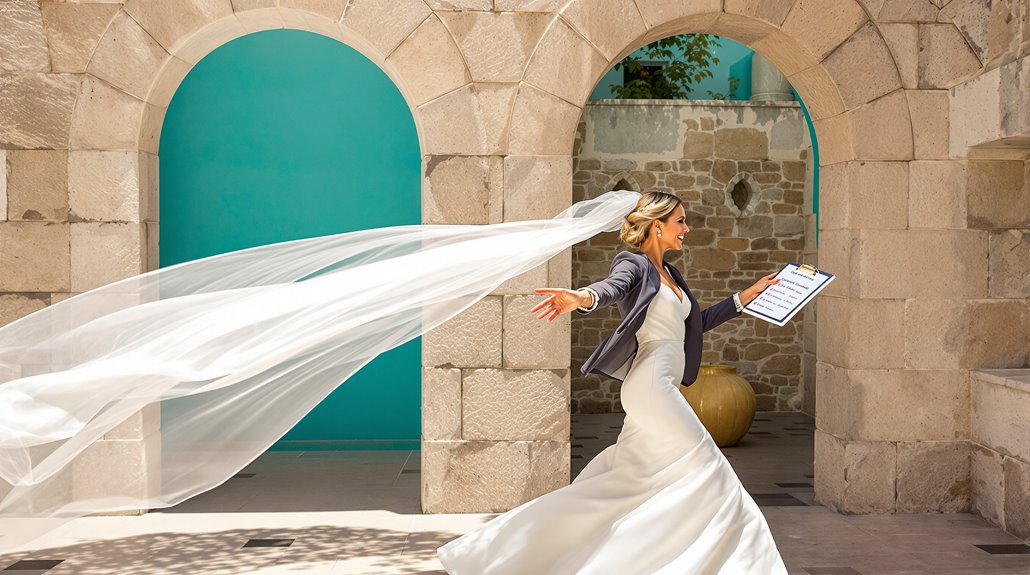
When it comes to crafting a wedding ceremony that hits all the right notes, a decision matrix is your secret weapon. This tool’s your go-to for deciding whether you’ll go religious, secular, spiritual, or civil. Picture it: a grid that strategically outlines ceremony lengths and components. You’ll see options like a 5-minute civil ceremony or a 45-minute spiritual gathering with added rituals. Each choice influences your timeline, guest patience, and overall vibe. Skip the fluff and get straight to the execution—efficiently and precisely.
To make it work, download our copy/paste decision matrix template. Pop in your must-haves, calculate potential overages, and conquer that timeline. Remember, clarity and momentum are your allies. Next up, streamline your ceremony with this decision tool in hand.
FAQ (quick answers to common edge cases)
Stuck between two ceremony options? Strategically streamline by prioritizing what’s non-negotiable and aligning with your ultimate vision. When guest counts swing or plans falter, pivot with a solid fallback plan by confirming vendor assumptions and building in buffer time—your checklist is your ceremony’s lifeline.
What if I’m stuck between two options?
You’re caught between two ceremony options and feel like you’re stuck in a wedding planning twilight zone. You want something that hits the sweet spot between meaningful and efficient, but how do you choose? First, list non-negotiables—traditions you can’t skip versus those you’re willing to ditch. Next, consider your guests. Do they appreciate brevity, or are they down for a longer, more involved ceremony? Check the legal requirements, which might dictate some of your choices. Combine elements strategically: a quick civil ceremony followed by a spiritually rich event could be your golden ticket. Consult your officiant for hybrid options that optimize time without sacrificing depth. Remember, it’s not about pleasing everyone; it’s about executing a day that resonates with you.
What’s the easiest way to reduce risk with either option?
Got two ceremony options and the jitters? Fear not. You can strategically reduce risks and stay efficient. First, streamline your ceremony by choosing a secular or civil format—these prioritize brevity and practicality, lasting around 5-20 minutes. If personalization is your jam, limit it: keep it to vows, rings, and the kiss. Next, verify venue rules; understand what’s non-negotiable in your jurisdiction to avoid last-minute surprises.
Manage guest comfort by capping your ceremony at 30 minutes max—nobody wants squirmy guests. Accelerate changes by scheduling the ceremony early, moving swiftly to the reception. Remember, it’s all about execution, not fluff. Embrace controlled chaos, and make intentional decisions—because getting the job done right means less stress and more celebration.
What should I ask vendors to confirm assumptions?
Let’s talk vendor assumptions—because guessing isn’t a strategy. You need facts to keep your big day running smoothly. With a Catholic officiant, confirm if you’re planning a full mass (60-90 minutes) or a ceremony only. Jewish ceremonies? Ask about additional rituals like the glass-breaking or hora. Hindu weddings often spread over days; check if rituals like pheras can be streamlined. Civil ceremonies are quick (15-20 minutes), but personal vows can add time. Get specifics from your venue on accommodating longer religious services or if gaps exist between ceremony and reception. Your mission: streamline with strategic vendor Q&A. Execute like a pro. Keep expectations clear. Reality check: assumptions breed chaos; clarity breeds confidence. Got questions? Hustle and Bustle’s got answers.
What changes if my guest count swings by 20%?
If your guest list swings by 20%, it’s not a disaster—it’s a dynamic pivot that needs sharp execution. First, check your venue’s capacity. Most medium-sized venues handle 75-150 guests. A swing from 93 to 139 guests? You’re golden. Next, tackle catering. Per-guest costs scale linearly, so trim or expand your menu and alcohol budget accordingly. Got a secondary invitation list? Use it to balance numbers if RSVPs surprise you. For logistics, adjust timelines and photographer coverage—more guests mean more photos and a longer reception. Out-of-town guests? Expect a 55% attendance; locals usually hit 85%. Plan strategically, anticipate shifts, and stay cool. Now, execute like the project manager you are—your wedding should be as on-point as your career.
What’s the best fallback plan if something goes wrong?
When things go sideways on your big day, don’t panic—strategic backup plans keep you in control and on track. First, have vetted backup vendors for vital roles like catering and photography. Contracts should detail contingency plans and backup equipment. Monitor weather forecasts and be ready to pivot between indoor and outdoor spaces. Keep rain kits with umbrellas and pashminas handy. Tech issues? No problem—store extra AV essentials onsite and provide clear directions to avoid bottlenecks. Handle attire emergencies with a dress disaster kit, equipped with stain remover and safety pins. Prioritize guest health by ordering extra meals and having an emergency contact list ready. Finally, always have wedding insurance—because peace of mind is priceless.
Next steps: make the decision + execute the plan
Deciding on your ceremony type is like choosing your wedding’s North Star—get it right, and everything else falls into place with military precision. First, get clear on what aligns with your beliefs and schedule. Whether you’re leaning towards a 60-minute religious ceremony or a 10-minute secular one, make it fit your life, not the other way around. Once decided, it’s time to execute with precision.
- Book your venue and officiant: Align with your chosen type.
- Customize the script: Focus on your love story for spiritual or secular.
- Strategically schedule: Civil ceremonies need registrar timing.
- Prepare ceremony booklets: Help guests navigate longer formats.
- Incorporate meaningful elements: Family readings or blessings enhance personalization.
Reality Check: Balancing personalization with efficiency is key.