
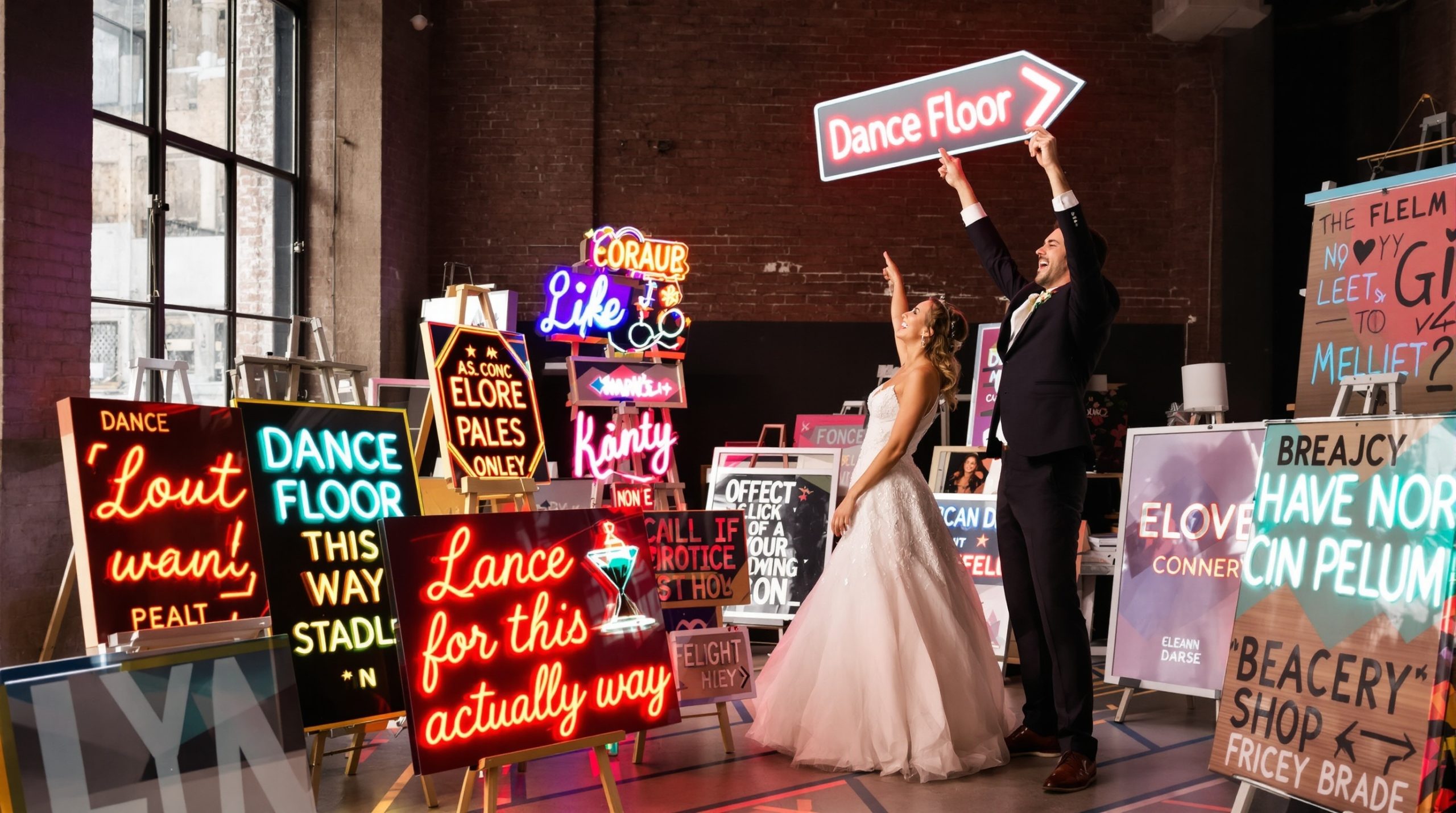
Forget the Pinterest palooza; your wedding signage strategy is all about efficiency. Need-to-haves? Get a welcome sign, seating chart, and directional markers—those priority pieces that’ll keep your guests curated like a well-executed corporate event. Avoid over-embellished nonsense; focus on concise, effective communication. Think of signage as your tactical GPS, guiding your guests while you sip on celebratory cocktails. Curious about how to optimize your signage strategy without losing sanity? Let’s amplify your wedding management prowess.
The short answer (what most people should do)
When it comes to wedding signs, keep it lean and mean—because you’ve got careers to crush and a life to live. Let’s talk necessary wedding signage that’s all about essential signage, not fluff. You need a Wedding Welcome Sign to set the tone, a Seating Chart to direct your guests like a boss, and Table Numbers that don’t mess around. A Guest Book Sign? Non-negotiable to capture those memories. Directional Signs strategically navigate everyone to their destinations. These must-have signs are your streamlined, smart shortcuts—efficiently executed to keep chaos controlled. Incorporating personality into your wedding signs can make them fun and memorable for your guests, enhancing the overall theme of your wedding. Forget the “Pinterest-perfect” nonsense. Focus on signs that pivot your wedding from stress to success. For a seamless experience, consider creating a detailed timeline that includes when and where each sign should be placed. Ready to gain momentum? Start by listing your top five must-haves and get those printed pronto.
The real answer: what it depends on
Maneuvering the wedding sign landscape is all about playing it smart and knowing your unique variables. Required signs wedding? It’s not one-size-fits-all. You’ve got to evaluate these critical factors:
- Venue Size: A sprawling venue demands more directional signs. Small spots? Streamline.
- Guest Count: More people mean more structure—think seating charts and program signs. Guest count significantly impacts costs and planning, as more guests lead to higher expenses.
- Event Style: Classy? Go for menu and bar signs. Playful? Add in ring bearer cuteness.
- Logistics Needs: Complex setups need clear directions. Simple scenes stick to basics.
- Personal Preferences: Minimalist? Just essentials. Want personality? Go wild with creative touches.
Wedding signage can include elements like welcome signs that set the tone and can be repurposed for multiple events. Your mission: strategically execute sign choices to match your wedding’s demands. Make intentional decisions, not impulsive buys, and remember—signs are the unsung heroes that get the job done.
Decision framework (choose the right move fast)
You’ve figured out your wedding’s unique sign needs—let’s quickly execute the decision-making framework that’ll make this process a breeze. First, assess your venue and event complexity—big space, more signs. Next, prioritize guest experience: make sure welcome and restroom signs are clear. Always consider the wedding style when choosing sign designs to ensure they align with the theme of your big day. Finally, balance your budget with aesthetic goals. Strategically streamline your choices with the table below:
| Venue Size/Complexity | Sign Needs |
|---|---|
| Small/Intimate | 4-6 essential signs |
| Medium/Large | Directional, table plans |
| Complex | 8-12 navigational signs |
Recommended timeline / checklist (so you don’t miss anything)
Eight months before your wedding, it’s time to kickstart the signage hustle. This isn’t just decoration—it’s execution. You’re setting the stage for a seamless experience. Here’s your streamlined timeline, so nothing slips through the cracks:
- 8 months before: Finalize designs, order samples, confirm printing. This is your first strategic move. Establishing a preliminary guest list at this stage ensures that your signage accurately reflects the number of attendees. Remember, enhancing guest experience should be a priority, so clear and informative signage can elevate their enjoyment.
- 4 months before: Verify orders, create setup instructions, plan placement. Precision now saves chaos later.
- 1 month before: Assign setup team, schedule walkthrough, coordinate with vendors. Your crew’s ready to rock.
- Wedding week: Pack signs, confirm day-of checklist, prepare emergency kit. No room for surprises.
- Day-of: Guarantee signs are up before guest arrival, plan breakdown. Execution’s non-negotiable.
Reality Check: Overlook details? Expect chaos. Be the exception.
Examples (realistic scenarios)
Envision this: you’re juggling a tight timeline with limited availability, and welcome signs become your secret weapon to reassure and direct guests efficiently. Or maybe you’ve got a flexible timeline and crave high customization—directional signs can strategically guide guests to tailor-made experiences. Ceremony decor can enhance the aesthetic of the space and inform guests about specific details like an unplugged ceremony. But if budget-first priorities rule your day, seating charts and table identifiers streamline your reception flow without breaking the bank. By prioritizing spending on what truly matters, you can efficiently allocate your budget to ensure that essential elements like signage are both effective and economical.
Scenario 1: tight timeline + limited availability
When you’re racing against the clock and every minute counts, directional signs are your non-negotiable MVPs. They strategically guide guests through large or outdoor venues, ensuring no one gets lost en route to the ceremony, cocktail hour, or reception. Place them at entrances and pathways with clear, bold fonts that match your theme.
Next up, welcome signs set the tone and confirm arrival locations. Opt for materials like acrylic or wood for durability and quick production. Position these at ceremony lobbies and reception entries. High-quality materials for wedding welcome signs ensure they complement the overall wedding theme and décor.
Streamline your day with order of events signs. These outline the schedule, reducing confusion and keeping everything on track. Utilize tech-driven tools to manage the timeline efficiently and keep guests informed of any last-minute changes. Finally, bar menu signs speed up lines, aiding efficiency during cocktail hour. Focus on essentials—no fluff, just what gets the job done.
Scenario 2: flexible timeline + high customization
Even with a flexible timeline, efficient execution is your secret weapon. You’ve got the luxury of time, but that doesn’t mean it’s a free-for-all. Strategic planning is key. Buffers between events? Non-negotiable. Doubling travel time across venues guarantees you’re not sprinting in heels. Sunset and dinner times are your anchor points—don’t budge. Your guests need a clear path: personalized timeline signs with icons, a vertical welcome that combines style with function, and cocktail hour signage that gets the mingling moving. Forget paper programs; an order of events sign does the job. Incorporating buffer time between major events ensures guests can mingle and reduces feelings of being rushed. Coordinate vendors like a CEO, guaranteeing smooth handoffs and no surprises. Ready to pivot? Good. Marry chaos with precision, and you’ll nail it. Allocate unexpected expenses budget to avoid financial strain during last-minute changes. Next step: Craft your customized itinerary.
Scenario 3: budget-first priorities
Sure, you’re counting every dollar, but that doesn’t mean you compromise on style. Execute your wedding signage plan with a strategic, budget-first mindset. Start by allocating 2% of your total budget specifically for essential signs. Prioritize a wedding welcome sign, seating chart, and directional signs to streamline guest movement—non-negotiables that get the job done. PVC signs? They’re cost-effective champs. Need to cut costs further? DIY digital downloads are your new best friend. Skip save-the-dates if your guest list is local; early invitations are more efficient. Limit signage to 5-10 pieces, focusing on high-impact areas like ceremony directions and restroom signs. Plan for contingencies to ensure you stay on budget while maintaining quality and style. Remember, small details like signage can enhance the overall luxury feel of your event. Ready to move? Grab a checklist, outline your essentials, and pivot those savings into a well-executed celebration.
What to avoid (common traps)
Planning your wedding signage isn’t just about slapping text on a board—it’s a strategic move in orchestrating a seamless event. Skip the chaos and avoid these common traps:
Strategic wedding signage planning is key to orchestrating a seamless event. Avoid chaotic, mismatched designs.
- Scattered Designs: Without a signage plan, you’ll end up with a mismatched mess. Strategize early.
- Cheap Materials: Substandard materials won’t last or photograph well. Invest in quality.
- Inconsistent Stationery: Different fonts and styles confuse guests. Stick with one stationer.
- Overcomplicated Designs: Too many fonts and patterns? That’s visual overload. Keep it simple with two fonts max.
- Poor Timeline Management: Underestimating production time means rushed jobs. Plan ahead, always.
- Strategic investments, such as in exceptional catering, can balance the overall budget, ensuring a memorable experience for your guests.
1-page action plan you can screenshot
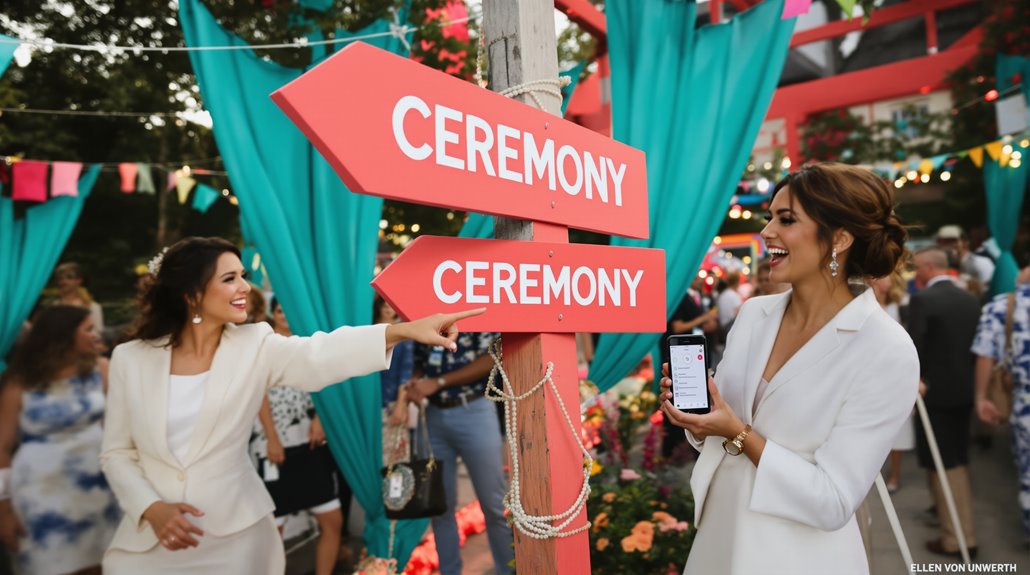
When it comes to wedding signage, execution is key, and having a streamlined action plan you can screenshot is non-negotiable. First, prioritize essential signs like your Wedding Welcome Sign and Unplugged Ceremony Sign. They set expectations and keep guests focused. Next, strategically plan your Directional Signs—restrooms, transportation, and creature comforts. These guide guests efficiently without the need for hand-holding. Don’t forget Reception Signs like Menu and Bar Menus to keep the energy flowing.
A structured timeline can help you manage all aspects of wedding planning, ensuring that essential steps like signage are clear and not overlooked.
Now, create a digital checklist. Use tools like Trello or Asana to track sign designs, locations, and installation timelines. Screenshot your plan for quick access on the go. Remember, executed plans beat pretty plans every time.
Reality Check: Over-signage clutters; keep it sharp and purposeful.
FAQ
Got a unique situation that doesn’t fit the mold? Start by making a list of the signs that are non-negotiable for you, and execute from there. The most common regret is not planning these details early, so don’t skip this step or you’ll find yourself playing catch-up. Ensure that your contracts are clear by including specific disruptors like pandemics in the force majeure clause to avoid potential disputes.
What if my situation doesn’t match the examples?
Feeling like your wedding setup is a square peg in a round hole? Don’t stress. It’s all about strategic execution. If your venue or theme doesn’t align with standard examples, pivot—don’t panic. Start by evaluating what’s genuinely necessary. Are you in a small venue? Skip elaborate wayfinding. Tight-knit guest list? Ditch excessive signage; focus on personal touchpoints. Got unique elements? Customize strategically. Guest book signs, bartender tips, food bar guides—each sign should serve a purpose. Streamline your needs with a quick checklist: venue layout, guest experience, and thematic coherence. Remember, the goal is to enhance, not clutter. Accelerate the decision-making process by prioritizing essentials. Now, get moving—your wedding project awaits its efficient, hustle-driven execution!
What’s the first thing I should do today?
You’ve got the venue layout and guest experience streamlined, now let’s put pedal to metal. Today, your mission is budget setting. Determine your total comfortable spending amount. Think of it as a strategic business decision: allocate funds to key areas like venue, catering, and attire. Nail down precise numbers, including family contributions. Establish your top three must-haves and save budget for those. Use this budget and a rough guest count to drive your date and venue decisions. Peek behind the curtain: factor in furniture rentals and venue amenities. Prioritize what truly matters—ditch the fluff. Once the budget’s executed, you’ve set the course. Next step? Immerse yourself in vendor research with a laser focus. Remember, clarity and precision win the day.
What’s the most common regret?
When it comes to wedding planning, regrets can haunt you like that pile of unread emails. The most common pitfalls? Time management tops the list. You might feel rushed during planning, and come the big day, everything could blur despite a 10-hour schedule. Strategic timelines are your ally—build buffer zones for vendor delays and spontaneous joyrides with guests.
Guest list decisions also rank high. More people mean more costs, more stress, and possibly, more cold feet. Be ruthless with that list. Vendor selection? Don’t skimp; quality photographers and videographers are non-negotiable.
Financial missteps? Allocate wisely—DIY is a slippery slope.
Reality Check: Streamline your decisions; focus on what gets the job done. Need help? We’re here for the hustle.
What’s a red flag that I’m moving too fast?
Ever wonder if you’re sprinting too fast down the aisle? Here’s your checklist for potential red flags. First, consider if you’re dismissing major red flags like sketchy social media posts or ignoring friends’ concerns. Is your partner getting a free pass on apparent character flaws? That’s a wake-up call. Are you isolating from your support network to spend all your time with them? Not ideal. Proverbs 11:14 reminds us that counsel is key—use it. If you’re talking engagement or future plans within a month, slow down. Rushing milestones creates false intimacy. Finally, if wedding planning feels like a battlefield, with decision delays and constant challenges, address it. Next steps? Take a breath, and recalibrate your pace.
What changes if I add/remove vendors?
Adding or removing vendors in your wedding planning process? Let’s break it down. Adding a signage vendor accelerates your event’s visual impact with custom designs and last-minute digital updates—think LED displays that aren’t just pretty but get the job done. Your vendors need a proof of insurance for installations, but they can strategically position signs in high-traffic zones. Removing vendors? Sure, it cuts costs, but you’ll pivot to DIY basics. This could risk coordination gaps, leaving guests confused. Without dynamic updates, you’ll rely on pre-planned static placements—less room for error but also less flexibility. Want streamlined guest experiences? Vendors can elevate essentials like welcome and bar signs. Evaluate your choices with a checklist: Do you want dynamic or static?
Key takeaways
Essential wedding signage isn’t just about aesthetics; it’s a strategic powerhouse that accelerates organization and guest experience. For those who think efficiency is an art form, here’s your essential arsenal:
- Seating Chart Displays: Non-negotiable for avoiding chaos when guests hunt for their seats.
- Directional Signage: Pivots guests effortlessly from ceremony to reception, like a GPS for humans.
- Bar and Beverage Signs: Because knowing your cocktail options shouldn’t be a mystery.
- Order of Events Signs: Keeps your timeline moving faster than a well-oiled machine.
- Restroom Direction Signs: Trust us, guests will thank you.
Now, execute these essentials with precision. Need more personalized plans? Create your checklist and guarantee every piece pulls its weight. Remember, it’s about strategic choices, not Pinterest dreams.